A flower shop doesn’t sell a product. It sells a deadline: the bouquet has to arrive today, for this birthday, this anniversary, this Valentine’s Day. That makes Google Ads for florists a game of timing, margins and inventory that changes every week.
For the last year and a half, Pixelco has run Google Ads for Flor de Passion, an independent flower delivery shop in New York City. Here is what the account looks like now compared with the same months a year ago.
 Flor de Passion
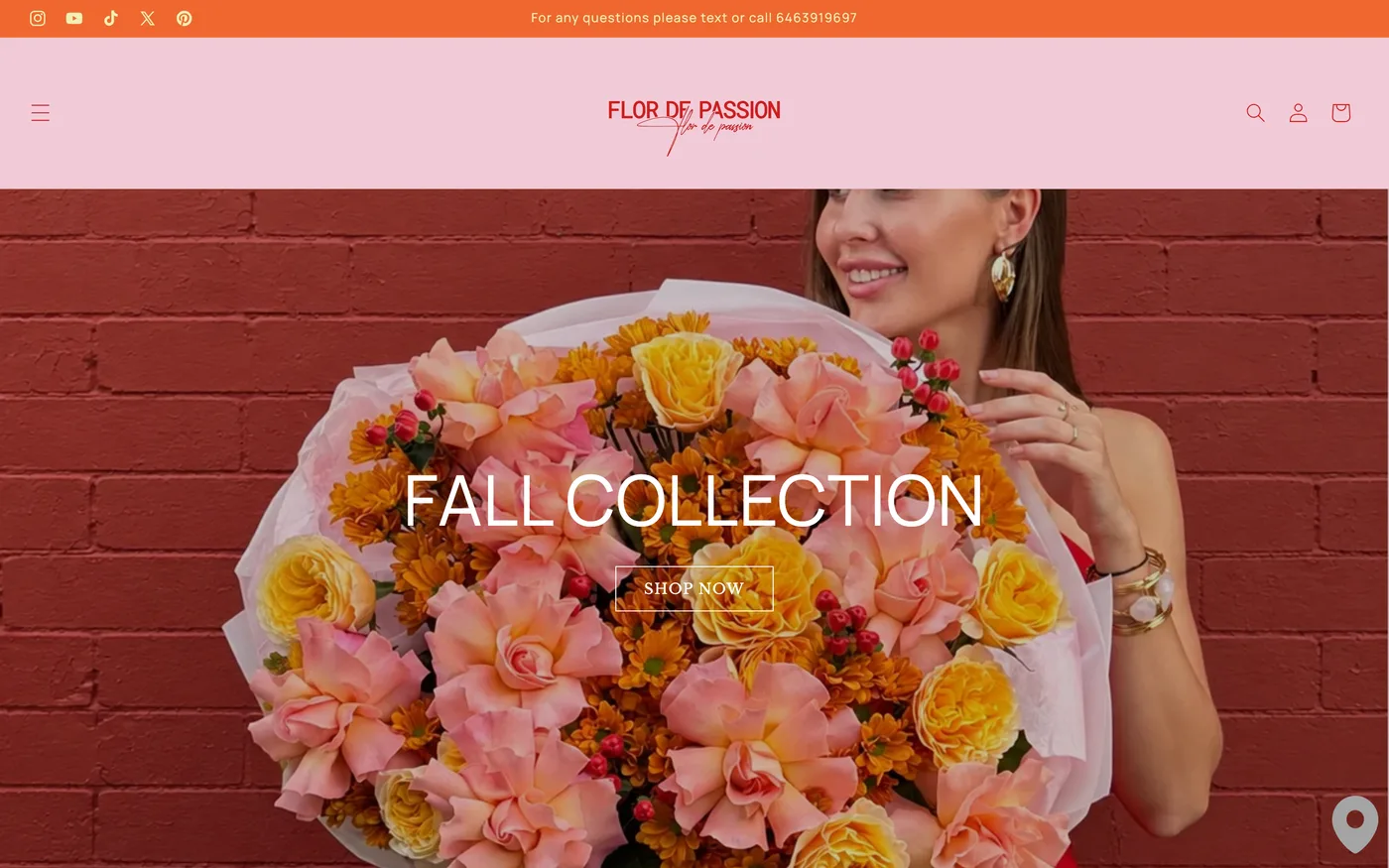
Luxury flower delivery in New York. Shopify store, same-day delivery and a local storefront. flordepassion.net ↗

Results at a glance (July–September 2026 vs. July–September 2025):
The challenge
Flor de Passion sells premium bouquets online through Shopify, with same-day delivery across New York and a local storefront. In spring and summer 2025, Google Ads brought in $1,000–2,000 in revenue a month, and the ad spend barely paid for itself. To scale, three things had to change:
- The account optimized for the wrong signals. Add-to-carts counted as conversions, so smart bidding chased clicks instead of orders.
- The product feed was messy. Disapproved items, outdated bouquets and missing shipping settings kept products out of Google Shopping.
- Holidays were treated like any other week, even though a florist can make a month’s revenue in the days before Valentine’s Day.
What we did
1. Rebuilt measurement around real orders. We made online purchases and their value the main goal, so Google’s bidding learns from revenue, not from clicks. In-store visits (“Get directions” and calls) are tracked separately for the local campaign.
2. Split the account by intent. Each type of demand gets its own campaign and budget:
- Search for high-intent queries such as “flower delivery NYC” and “same day flower delivery”
- Performance Max Shopping to show bouquets with photos and prices in Google Shopping
- Brand Search to protect the shop’s name from competitors
- Performance Max Local to bring people to the store
3. Cleaned up the product feed. We fixed disapprovals in Google Merchant Center, set up shipping costs correctly, removed weak products and kept the catalog in sync with what is actually in stock.
4. Moved to value-based bidding. Campaigns run on Target ROAS, tuned month by month, so the budget flows to the queries and bouquets that bring revenue.
5. Planned the holidays in advance. For Valentine’s Day we built separate product groups, raised bids ahead of the peak, watched margins daily and switched holiday ads off right after February 14 so the budget didn’t burn on late searches.
6. Kept the search traffic clean. Weekly search-term reviews, a growing negative keyword list, competitor monitoring and regular ad and creative tests.
The results
Once the account was profitable, we scaled it. Ad spend grew 2.9× year over year and revenue from Google Ads grew 4.8×, so revenue per ad dollar went up from 1.7× to 2.9× even as the budget grew.
| Month | Revenue 2025 | Revenue 2026 | Growth | Ad spend 2025 → 2026 |
|---|---|---|---|---|
| February | $4,835 | $14,490 | 3.0× | $1,081 → $1,949 |
| July | $1,183 | $10,680 | 9.0× | $1,253 → $3,580 |
| August | $2,112 | $11,690 | 5.5× | $1,296 → $3,815 |
| September | $3,508 | $10,010 | 2.9× | $1,368 → $3,932 |
| Jul–Sep total | $6,803 | $32,380 | 4.8× | $3,918 → $11,327 |
Revenue from Google Ads traffic in Google Analytics 4 (last click). Google Ads’ own attribution reports more: $37,000 in purchases for July–September 2026.
Valentine’s Day 2026
February is the month that makes or breaks a florist’s year. In February 2026 Google Ads brought in $14,490 in revenue, 3× more than in February 2025, at a 7× return on ad spend.
Orders, purchases ($13,800) and spend from Google Ads; revenue from Google Analytics 4.
A steady month, not a lucky one
From March to September 2025, Google Ads brought Flor de Passion $1,000–3,500 a month. Since October 2025 it has not dropped below $6,600 in any month, and from July to September 2026 it held above $10,000 every month.
What worked: 4 lessons for florists
- Bid on orders, not clicks. If Google doesn’t know which clicks turned into paid orders, it optimizes for the wrong thing. Fix tracking before you touch the budget.
- Your product feed is your storefront. In Google Shopping a clean feed with the right photos, prices and shipping costs often matters more than bids.
- Advertise what actually sells. Bestsellers change with the season. We check which bouquets sell on the site every month and make sure they get ad coverage.
- Holidays start weeks before the holiday. Valentine’s Day, Mother’s Day and the winter holidays are won in the preparation: budgets, product groups and ads ready before demand peaks, and switched off right after.
Planning for the holiday season?
Thanksgiving, Christmas and Valentine’s Day 2027 are coming up, and the best holiday campaigns are set up weeks in advance. Pixelco builds and runs Google Ads for florists and e-commerce brands. Book a strategy call and we’ll show you where your account is leaving money on the table. Want to see more from the flower industry? For Scarlet Flowers we run Google Ads, SEO and the website itself: that case study is coming soon.
FAQ
How much should a flower shop spend on Google Ads?
Flor de Passion spent about $1,100–1,400 a month in 2025 and scaled to $3,500–4,000 a month by summer 2026, once the account was profitable. Start with a budget you can sustain for 2–3 months while bidding learns, then grow it with the results.
Is Performance Max good for florists?
Yes, if your product feed is clean and conversion tracking counts real orders. Performance Max Shopping puts your bouquets with photos and prices in front of people ready to buy. It works best alongside a Search campaign for high-intent queries like "same day flower delivery".
How long does it take to see results from Google Ads for a florist?
In this account, monthly revenue from Google Ads went from $2,100 in August 2025 to $8,700 in October 2025, after a round of feed fixes, shipping setup and bidding changes. Give a rebuilt account at least 4–8 weeks before judging it.