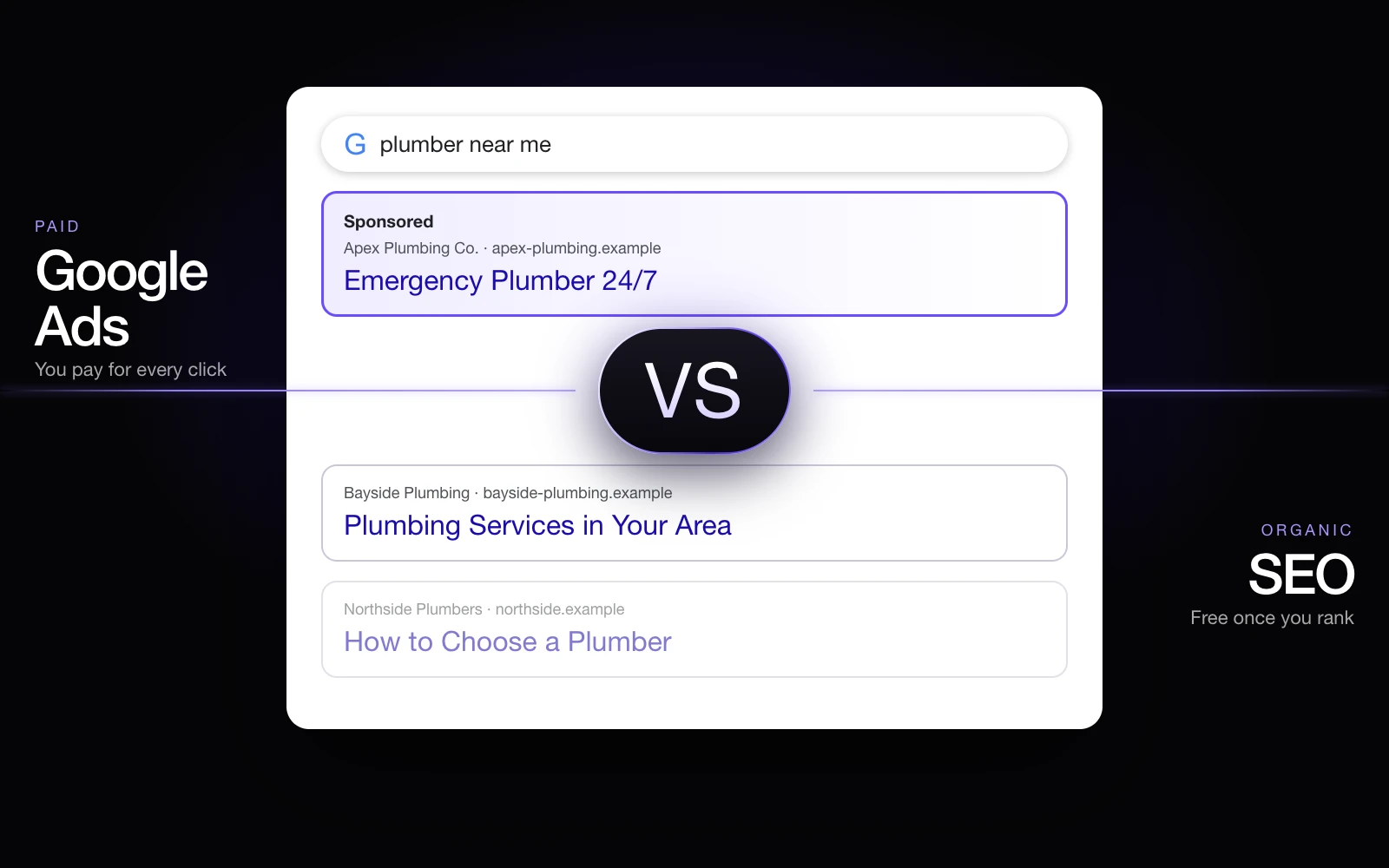

Every managing partner asks the same question before they spend a dollar on Google: how much is this going to cost me?
Here’s the honest answer. Legal is the most expensive industry on Google Ads, and it isn’t close. But “expensive” is the wrong way to look at it. A click that costs $10 and turns into a $20,000 engagement is the cheapest marketing you’ll ever buy. A click that costs $10 and goes to someone looking for a free lawyer is money set on fire.
This guide gives you the real 2026 numbers, a simple formula to set your budget, and the handful of mistakes that make one firm pay twice as much as another for the same client.
The short answer
According to the 2026 Google Ads benchmarks from LocaliQ and WordStream (more than 13,000 search campaigns, April 2025 – March 2026), attorneys and legal services pay more than any other industry:
| Metric | Attorneys & legal services | All industries |
|---|---|---|
| Average cost per click | $9.87 | $5.42 |
| Average cost per lead | $131.63 | $66.69 |
| Average conversion rate | 5.55% | 8.18% |
| Average click-through rate | 5.87% | 6.64% |
Two things jump out. Legal clicks cost almost twice the average. And fewer of those clicks turn into leads. That combination is why law firm accounts punish sloppy management harder than almost any other vertical.
Keep in mind these are averages across all practice areas. Your number depends on what you practice and where.
Cost per click is the wrong number to watch
Most firms obsess over cost per click. It’s the number Google shows you first, so it feels important. It isn’t. There are three costs that matter, and they stack:
- Cost per click. What you pay when someone clicks your ad.
- Cost per lead. What you pay for a call, form or chat. If 1 in 13 clicks becomes a lead, a $9.87 click means a lead costs about $128.
- Cost per signed client. What you pay for someone who actually retains you. This is the only number your P&L cares about.
Illustrative math at legal-industry averages. Your rates will differ.
A firm paying $15 a click with a tight intake process can beat a firm paying $7 a click with a receptionist who lets calls go to voicemail. We see it constantly.
The cheapest leads are rarely the cheapest clients.
What drives the price in your practice area
Google Ads is an auction. You’re bidding against every other firm that wants the same searcher, so the price follows the value of the case.
- Personal injury sits at the top. A January 2026 analysis of the most expensive keywords on Google found injury terms like “motorcycle injury lawyer” running around $210 per click. Contingency fees on a big case justify bids that would bankrupt most businesses.
- Mass tort, workers’ comp and medical malpractice behave similarly: high case values, aggressive competitors, national players with deep pockets.
- Criminal defense, DUI, family law and immigration are usually more moderate per click, but highly local and highly urgent. Someone searching “DUI lawyer near me” at 11 p.m. on a Saturday wants an answer now.
- Niche practices such as entertainment, sports, IP or business law often have fewer competitors and smaller search volume. Clicks can be cheaper, and the clients can be worth a lot. The game here is precision, not volume.
Relative click prices by practice area. Exact costs depend on the market and the keyword.
Location matters just as much. A click in Miami, Los Angeles or New York costs more than the same keyword in a mid-size market, because more firms are fighting over it.
How to set your budget: the formula
Don’t pick a budget because it “feels right” or because an agency quoted a package. Work backward from the clients you want.
Monthly budget = (new clients you want ÷ lead-to-client rate) × cost per lead
Here’s an example. These numbers are illustrative, so plug in your own:
- You want 5 new clients a month.
- About 1 in 4 leads books a consultation, and 2 in 5 consultations sign. That’s a 10% lead-to-client rate.
- So you need 50 leads.
- At the legal average of $131.63 per lead, that’s roughly $6,600 a month in ad spend.
≈ $6,600 a month in ad spend at $131.63 per lead
Then sanity-check it against the value of a client. If your average engagement is worth $8,000, five clients bring in $40,000 on $6,600 of spend. That’s a business. If your average engagement is worth $1,500, you need a cheaper lead, a better close rate, or a different channel.
What about a minimum? Google needs data to optimize. In our experience, an account needs at least a few hundred clicks a month to learn which searches convert. At legal prices, that usually means $3,000 a month or more per practice area and market. Spread $1,500 across five practice areas and three cities, and you’ll get a trickle of data that never tells you anything.
Google Ads vs. Local Services Ads
For many practice areas, Google also offers Local Services Ads (the “Google Screened” listings at the very top of the page). The model is different: you pay per lead, not per click, and Google verifies your license and reviews before you can run them.
Industry estimates put legal LSA leads at roughly $195–$250 each in 2026, with personal injury at the top of that range. That’s higher per lead than the search average, but there are no wasted clicks, and you can dispute leads that aren’t real.
Our take: if LSAs are available for your practice area, run them alongside search ads, not instead of them. LSAs win the “near me” and “call now” searches. Search ads let you control the message, target specific case types, and send people to a page built to convert.
Why some firms pay twice as much for the same client
When we audit law firm accounts, the same leaks show up again and again:
- Paying for the wrong searches. Broad keywords pull in “free legal aid,” “lawyer salary,” “how to become a paralegal” and “pro bono attorney.” Every one of those clicks costs you full price. Review your search terms report weekly and build a long negative keyword list.
- Counting every call as a lead. A 12-second call from a vendor isn’t a lead. If your account optimizes for all calls, Google gets very good at finding cheap, useless ones. Define a qualified call (for example, a call over 60–90 seconds, or one your intake team tags as a potential client) and optimize for that.
- Sending traffic to the homepage. Someone searching “contract review lawyer for musicians” should land on a page about exactly that, with a phone number and a short form above the fold, not on a homepage that lists 14 practice areas.
- Missed calls. If calls go to voicemail after 5 p.m., you’re paying for leads your competitors answer. Either staff the phones, use an answering service, or schedule your ads around the hours you can pick up.
- One campaign for everything. Personal injury, family and criminal clicks have completely different values. Lump them together, and Google spends your budget wherever clicks are cheapest, not where cases are most valuable.
- Wrong geography. “Presence or interest” targeting can show your Miami ads to someone in Ohio who once read about Miami. Target people in your service area.
- No connection between ads and outcomes. If your intake software never tells Google which leads signed, Google optimizes for form fills, not clients. Importing offline conversions is the single biggest upgrade most firms can make.
Fix these and, without changing your budget, you’ll usually see more qualified leads, often within weeks.
What this looks like in a real account
We run Google Ads, SEO and the website for an entertainment law firm in Miami that represents musicians, producers and athletes. It’s a classic niche practice: a small pool of searchers, each one potentially worth a lot.
Instead of chasing broad “lawyer Miami” traffic, we built campaigns around the specific services the firm sells, such as music contracts, royalties, sports and NIL deals, and visas for artists. We tightened the search terms and optimized only for qualified calls.
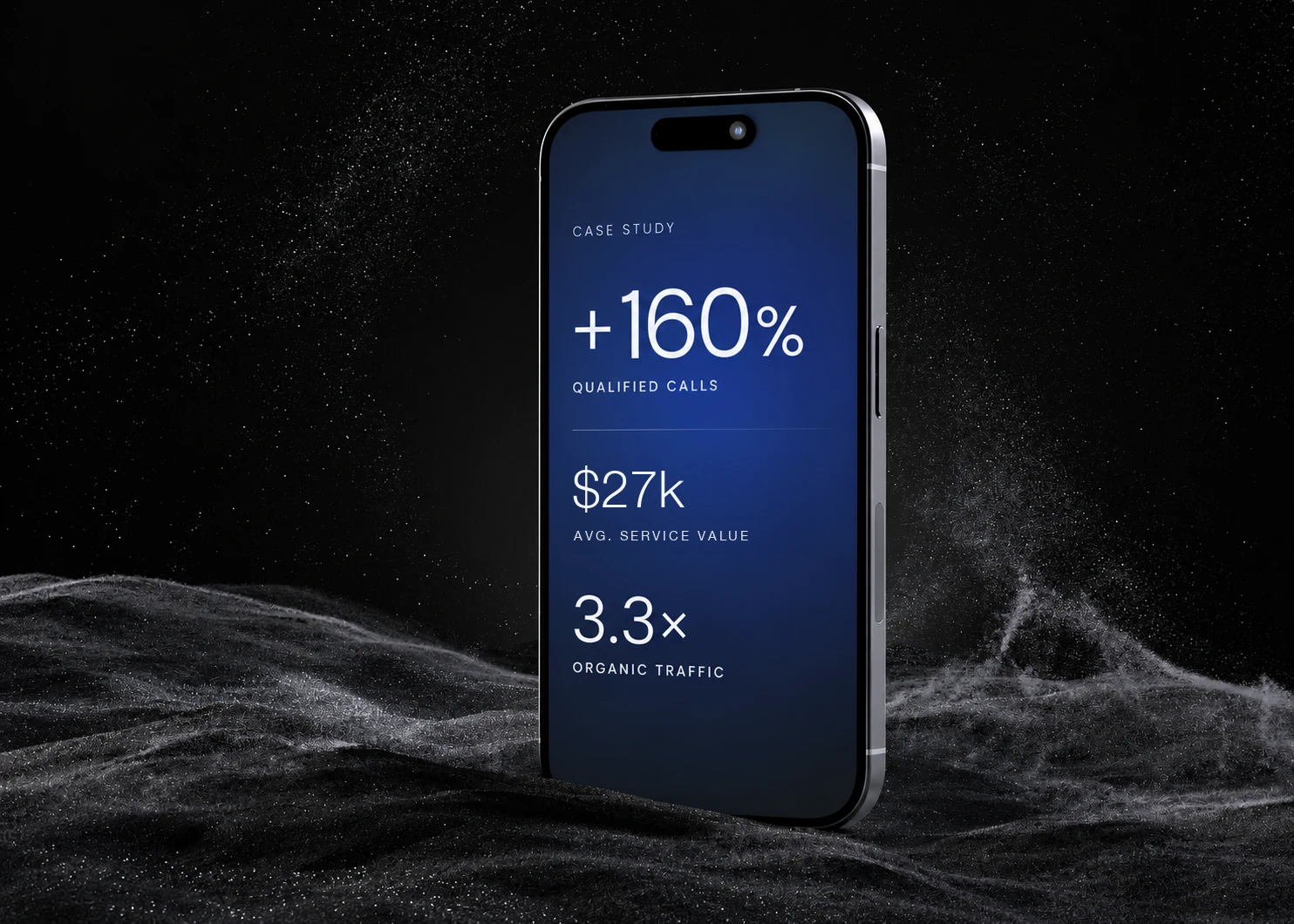 Case study · Miami entertainment law firm
+160%qualified calls, Jan–Sep 2026 vs 2025
$27kaverage value of a service the firm sells
Read the case study →
What an agency should cost you (and what to ask)
Your total cost is ad spend plus management. Most agencies charge either a flat monthly fee or a percentage of ad spend. Neither is wrong. What matters is what you get for it. Before you sign, ask:
- Do I own the Google Ads account? You should. If you leave, your data stays with you.
- What do you count as a lead? If the answer is “all calls and form fills,” keep asking.
- Will you track leads to signed clients? An agency that only reports clicks and impressions is grading its own homework.
- Who builds the landing pages? Ads and landing pages need to work as one system.
- How often will we talk, and what will you show me? Monthly reports should show cost per qualified lead and, ideally, cost per signed client.
The bottom line
Google Ads for lawyers is expensive per click and worth it per client, if the account is built around the right number. Set your budget from the clients you want, not the clicks you can afford. Track every lead to a signed case. Plug the leaks before you raise the budget.
Want a second set of eyes on your account? We'll show you where the budget leaks and what to fix first.
Book a call with PixelcoFAQ
How much does Google Ads cost for a law firm per month?
Most firms that get consistent results spend $3,000 or more per month per practice area and market, plus management. Use the formula above: the clients you want, divided by your lead-to-client rate, multiplied by your cost per lead.
What is the average cost per click for lawyers?
$9.87 in 2026, the highest of any industry, according to LocaliQ and WordStream benchmarks. Competitive personal injury keywords can run well over $100 per click.
What is the average cost per lead for lawyers on Google Ads?
$131.63 on average across legal services in 2026, about double the all-industry average of $66.69. Your real cost depends on your practice area, market and intake process.
Are Google Ads worth it for lawyers?
Yes, when the value of a client is well above the cost of acquiring one and the account optimizes for qualified leads, not just clicks. A single retained client can cover months of ad spend.
Should a law firm use Google Ads or SEO?
Both, in that order. Google Ads produces leads within days. SEO takes months to build, but lowers your cost per client over time. Most firms run ads to fill the pipeline while SEO compounds.